 Activity, Motor Control & Coordination
 Pain - Thermal Allodynia / Hyperalgesia
 Pain - Spontaneous Pain - Postural Deficit
 Pain - Mechanical Allodynia / Hyperalgesia
 Anxiety & Depression Disorder
 Learning/Memory - Attention - Addiction
 Physiology & Respiratory Research
 Metabolism & Nutrition

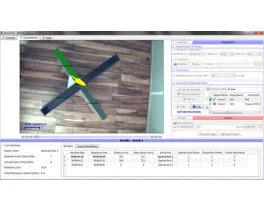
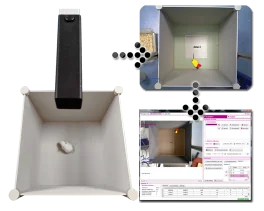
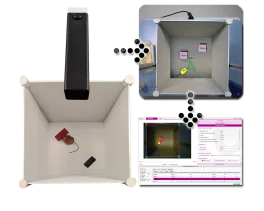
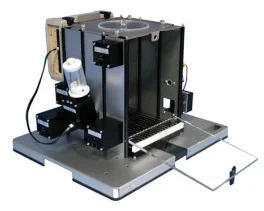
![Dynamic Weight Bearing 2.0 – Postural Module [Add-on]](https://bioseb.com/733-home_default/dynamic-weight-bearing-20-add-on-postural-module.jpg)




 Pain
Pain Central Nervous System (CNS)
 Neurodegeneration
 Sensory system
 Motor control
 Mood Disorders
 Other disorders
 Muscular system
 Joints
 Metabolism
 Cross-disciplinary subjects
 CONFERENCES & MEETINGS 2026
 Authors
Vieira de S, Renata, Sudria-Lopez, Emma, Caizares Luna, Marta, Harschnitz, Oliver, van den Heuvel, Dianne M. A., Kling, Sandra, Vonk, Danielle, Westeneng, Henk-Jan, Karst, Henk, Bloemenkamp, Lauri, Varderidou-Minasian, Suzy, Schlegel, Domino K., Mars, Mayte, Broekhoven, Mark H., van Kronenburg, Nicky C. H., Adolfs, Youri, Vangoor, Vamshidhar R., de Jongh, Rianne, Ljubikj, Tijana, Peeters, Lianne, Seeler, Sabine, Mocholi, Enric, Basak, Onur, Gordon, David, Giuliani, Fabrizio, Verhoeff, Tessa, Korsten, Giel, Calafat Pla, Teresa, Ven, Morten T., Kjems, Jrgen, Talbot, Kevin, van Es, Michael A., Veldink, Jan H., van den Berg, Leonard H., Zelina, Pavol, Pasterkamp, R. Jeroen
Lab
Journal
Nature Communications
Abstract
Intermediate-length repeat expansions in ATAXIN-2 (ATXN2) are the strongest genetic risk factor for amyotrophic lateral sclerosis (ALS). At the molecular level, ATXN2 intermediate expansions enhance TDP-43 toxicity and pathology. However, whether this triggers ALS pathogenesis at the cellular and functional level remains unknown. Here, we combine patient-derived and mouse models to dissect the effects of ATXN2 intermediate expansions in an ALS background. iPSC-derived motor neurons from ATXN2-ALS patients show altered stress granules, neurite damage and abnormal electrophysiological properties compared to healthy control and other familial ALS mutations. In TDP-43Tg-ALS mice, ATXN2-Q33 causes reduced motor function, NMJ alterations, neuron degeneration and altered in vitro stress granule dynamics. Furthermore, gene expression changes related to mitochondrial function and inflammatory response are detected and confirmed at the cellular level in mice and human neuron and organoid models. Together, these results define pathogenic defects underlying ATXN2-ALS and provide a framework for future research into ATXN2-dependent pathogenesis and therapy. Intermediate-length repeat expansions in ATXN-2 are the strongest genetic risk factor for ALS. Here, the authors combine patient-derived motor neurons and organoids with mouse models to dissect the pathogenic effects of ATXN2 intermediate expansions.
Keywords/Topics
ataxin-;intermediate-length;polyglutamine;expansions;elicit;als-associated;metabolic;immune;phenotypes;repeat
BIOSEB Instruments Used:
Grip strength test (BIO-GS4)
Source :