 Activity, Motor Control & Coordination
 Pain - Thermal Allodynia / Hyperalgesia
 Pain - Spontaneous Pain - Postural Deficit
 Pain - Mechanical Allodynia / Hyperalgesia
 Anxiety & Depression Disorder
 Learning/Memory - Attention - Addiction
 Physiology & Respiratory Research
 Metabolism & Nutrition


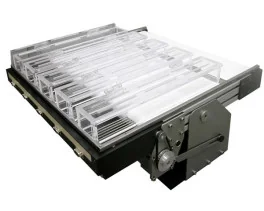
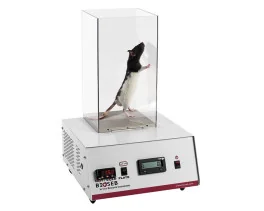
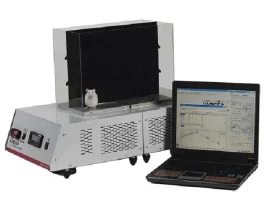
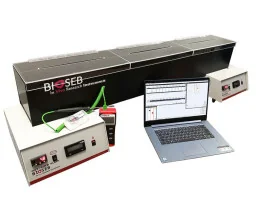






 Pain
 Central Nervous System (CNS)
 Neurodegeneration
 Sensory system
 Motor control
 Mood Disorders
 Other disorders
 Muscular system
 Joints
 Metabolism
 Cross-disciplinary subjects
 CONFERENCES & MEETINGS 2026
Authors
Abdul Halim, Ibrahim, Gerber, Kalin R., Gelford, Weston B., Ellington, Cierra L., Mousa, Mohamed H., Garrett, Teresa L., Elbasiouny, Sherif M.
Lab
United States; Canada; Canada
Journal
Frontiers in Aging Neuroscience
Abstract
IntroductionMechanisms underlying age-related weakness are not fully understood, with neuronal mechanisms recently gaining attention. Despite studies on excitatory and inhibitory inputs, conflicting findings on α-motoneuron intrinsic excitability and PIC changes highlight a major gap in explaining age-related strength decline.MethodsUsing electrophysiological and immunohistochemical approaches, we present direct assessment of intrinsic excitability, cell size, and ion channel membrane expression in adult spinal α-motoneuron types of male and female mice across three age groups: young (3–4 months), middle aged (12–14 months), and old (24–30 months). To account for variability in aging and assess the association with motor function, these physiological and histological parameters were correlated with forelimb and hindlimb grip strength.ResultsOur findings reveal a decline in intrinsic excitability of spinal α-motoneurons with aging in both male and female mice, with a more pronounced e!ect in females. Specifically, female motoneurons show increase in rheobase and reduction in firing gain, whereas in males, only firing gain is reduced. Moreover, age-related strength is correlated with α- motoneuron excitability; the lower the α-motoneuron excitability, the weaker the aged mouse. Notably, fast-type α-motoneurons are the most affected by aging-related excitability decline. Further mechanistic analysis indicates sex-specific differences in motoneuron aging: female motoneurons exhibit increased cell capacitance, hyperpolarized resting membrane potential (RMP), and increased expression of SK channels, while male motoneuron show increased expression of SK channels without cell capacitance or RMP alterations. SK increased expression was specific to FF and FI types in male and female mice.DiscussionThese findings reveal sex-specific aging mechanisms in motoneurons, explain women’s higher frailty risk, and identify novel drug targets to counteract age-related muscle weakness and neuromuscular decline in older adults.
Keywords/Topics
aging; weakness; intrinsic excitability; spinal motoneurons; motoneuron types; SK channels
BIOSEB Instruments Used:
Grip strength test (BIO-GS4)
Source :