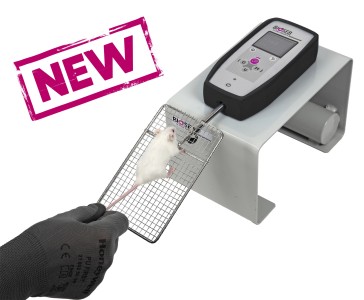
 Activity, Motor Control & Coordination
 Pain - Thermal Allodynia / Hyperalgesia
 Pain - Spontaneous Pain - Postural Deficit
 Pain - Mechanical Allodynia / Hyperalgesia
 Anxiety & Depression Disorder
 Learning/Memory - Attention - Addiction
 Physiology & Respiratory Research
 Metabolism & Nutrition





 Pain
 Central Nervous System (CNS)
 Neurodegeneration
 Sensory system
 Motor control
 Mood Disorders
 Other disorders
 Muscular system
 Joints
 Metabolism
 Cross-disciplinary subjects
 CONFERENCES & MEETINGS 2026
Authors
Laleh Khodadadi, Deborah Puppe, Dilara S. Cirillo, Carolina Martinez-Cingolani, Jens Klotsche, Andreas Pelz, Siegfried Kohler, Qingyu Cheng, Konstantinos Lazaridis, Michael Fichtner, Jan Pille, Andrey Kruglov, Marina Bondareva, Tobias Alexander, Andreas Radbruch, Andreas Meisel, Falk Hiepe
Lab
Journal
European Journal of Immunology
Abstract
Myasthenia gravis (MG) is a prototypic antibody-mediated autoimmune disease that affects the signal transmission at the neuromuscular junction (NMJ) and is characterized by skeletal muscle fatigability and weakness [1]. In approximately 85% of patients, the main target of autoantibodies is the acetylcholine receptor (AChR). Less common autoantigens include the muscle-specific kinase (MuSK) and the low-density lipoprotein receptor-related protein 4 (LRP4) [2]. The AChR is a pentameric transmembrane protein with a stoichiometry of α2βδε in adults [3]. Binding of antibodies to the extracellular domains leads to steric inhibition of the ligand-binding site between the subunits αε and αδ, antigenic modulation, and complement-dependent degradation of the muscle end-plate [2]. The extracellular domain of the α-subunit (αECD) has a predominant role in MG pathogenesis, as it contains the main immunogenic region (MIR) at the amino acid residues 67–76 [4] and is recognized by two-thirds of the AChR-specific antibodies [5]. Its accessible position toward the synaptic cleft and the occurrence of two MIRs per receptor predispose this subunit for effective antibody binding and subsequent antigenic modulation, explaining the immunogenic potential of the alpha subunit [6]. A recent meta-analysis pointed to a positive correlation between autoantibody levels and disease activity in patients with MG [7]. Nevertheless, it remains controversial whether antibody titres can guide treatment decisions. Anti-MIR antibody titers have been suggested to be a predictor of disease severity [8]. These data suggest a crucial role for AChR αECD-antibodies in MG pathogenesis, making them and the cells secreting them a potential therapeutic target.
Keywords/Topics
autoreactive plasma cells; autoimmunity; myasthenia gravis; selective depletion
BIOSEB Instruments Used:
Grip strength test (BIO-GS4)
Source :