
 Activity, Motor Control & Coordination
 Pain - Thermal Allodynia / Hyperalgesia
 Pain - Spontaneous Pain - Postural Deficit
 Pain - Mechanical Allodynia / Hyperalgesia
 Anxiety & Depression Disorder
 Learning/Memory - Attention - Addiction
 Physiology & Respiratory Research
 Metabolism & Nutrition

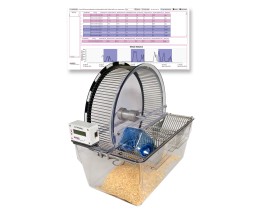









![Dynamic Weight Bearing 2.0 – Postural Module [Add-on]](https://bioseb.com/733-home_default/dynamic-weight-bearing-20-add-on-postural-module.jpg)


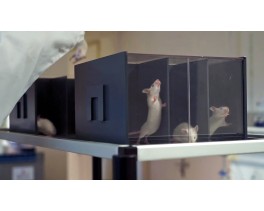



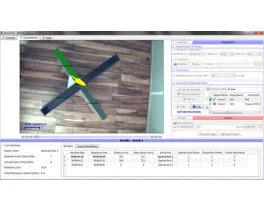
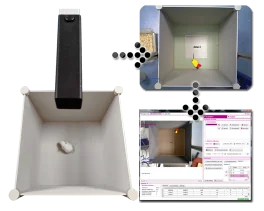














 Pain
Pain Central Nervous System (CNS)
 Neurodegeneration
 Sensory system
 Motor control
 Mood Disorders
 Other disorders
 Muscular system
 Joints
 Metabolism
 Cross-disciplinary subjects
 CONFERENCES & MEETINGS 2026
 Authors
Jia, Wen-Bin, Wang, Xin-Yue, Xia, Xin-Xin, Tang, Liu, Liang, Yu-Xuan, Lei, Xiao-Lin, Liu, Xiao-Qing, Hu, Wei, Zhang, Yan
Lab
Authors and Affiliations
Journal
Nature Communications
Abstract
Fear and pain are two frequently co-occurring states that mammals need to orchestrate to ensure survival. Nevertheless, how the brain dynamically prioritizes between them remains poorly understood. Here, we demonstrate that innate fear suppresses both acute and chronic pain, whereas pain does not reciprocally modulate fear responses in male mice. Using fiber photometry, virus tracing, and electrophysiological approaches, we show that exposure to a fear-inducing odor activates GABAergic neurons in the anterior piriform cortex (APC), which subsequently attenuates pain-associated hyperactivity in the downstream mediodorsal thalamus (MD). Crucially, inhibiting either APCGABA neurons or the APCGABA-MD circuit enhances pain sensitivity and abolishes fear-induced analgesia. Conversely, activation of APCGABA neurons or the APCGABA-MD circuit induces freezing responses and relieves pain, mimicking fear-induced analgesia. These findings unveil a corticothalamic circuit that bidirectionally regulates pain processing and underlies fear-provoked analgesia, offering potential therapeutic avenues for pain management. Survival requires prioritizing threats over pain. The authors identify a brain circuit in male mice, where fear signals from the cortex block pain-associated activation in the thalamus, revealing how fear suppresses pain and offering a potential target for therapies.
Keywords/Topics
Chronic pain; Neural circuits
BIOSEB Instruments Used:
Grip strength test (BIO-GS4)
Source :