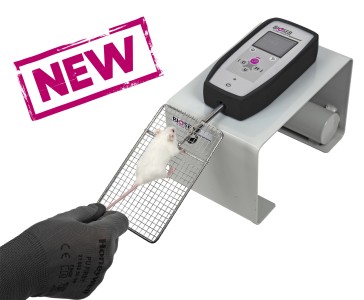
 Activity, Motor Control & Coordination
 Pain - Thermal Allodynia / Hyperalgesia
 Pain - Spontaneous Pain - Postural Deficit
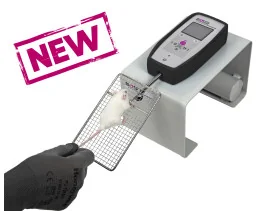
 Pain - Mechanical Allodynia / Hyperalgesia
 Anxiety & Depression Disorder
 Learning/Memory - Attention - Addiction
 Physiology & Respiratory Research
 Metabolism & Nutrition
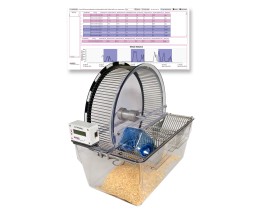
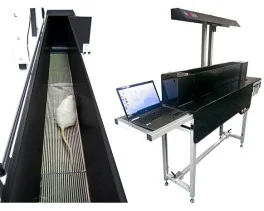
![Dynamic Weight Bearing 2.0 – Postural Module [Add-on]](https://bioseb.com/733-home_default/dynamic-weight-bearing-20-add-on-postural-module.jpg)





 Pain
Pain Central Nervous System (CNS)
 Neurodegeneration
 Sensory system
 Motor control
 Mood Disorders
 Other disorders
 Muscular system
 Joints
 Metabolism
 Cross-disciplinary subjects
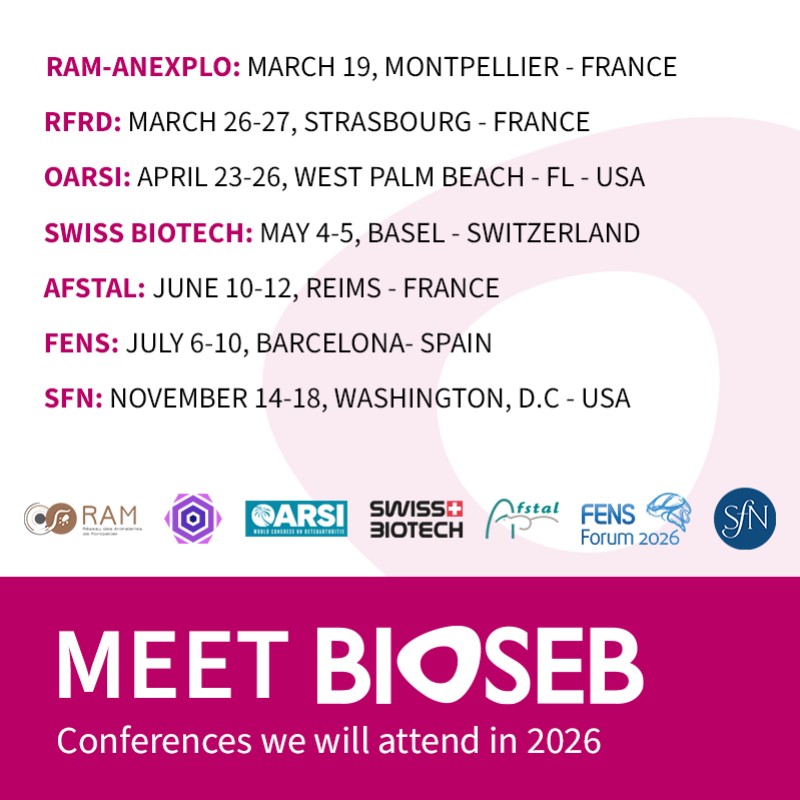 CONFERENCES & MEETINGS 2026
 Authors
Natasha Jackson, Lizhao Feng, Jianfei Chao, Peng Ye, Qui Luong, Kayla Galo, Guihua Sun, Weidong Hu, Yanhong Shi
Lab
Journal
Stem Cell Reports
Abstract
Summary
Canavan disease (CD) is a severe neurodegenerative disorder caused by aspartoacylase (ASPA) deficiency, leading to N-acetyl-L-aspartic acid (NAA) accumulation and spongy degeneration. While several therapeutic candidates improve outcomes in CD mouse models when delivered before symptom onset, there remains a need for treatments targeting established disease pathology. Here, we demonstrate that transplantation with human induced pluripotent stem cell (iPSC)-derived neural progenitor cells (NPCs) expressing a functional ASPA gene (ASPA iNPCs) can rescue disease manifestations in symptomatic CD (Nur7) mice. When administered at postnatal day 21 (P21), ASPA iNPCs successfully engrafted, differentiated into neural lineage cells, and restored ASPA activity as revealed by reduced NAA level. Transplanted mice showed a significant reduction in brain and cerebrospinal fluid (CSF) NAA levels, decreased vacuolation across multiple brain regions, improved myelination, and enhanced motor function 6-month post-transplantation. Our findings demonstrate that ASPA iNPC transplantation can effectively reverse established CD pathology, suggesting therapeutic potential for treating symptomatic patients.
Keywords/Topics
Canavan disease; demyelinating diseases; induced pluripotent stem cells; iPSCs; neural progenitor cells; NPCs; symptomatic; cell therapy; stem cell therapy
BIOSEB Instruments Used:
Grip strength test (BIO-GS4)
Source :
https://www.cell.com/stem-cell-reports/fulltext/S2213-6711(25)00389-3