
 Activity, Motor Control & Coordination
 Pain - Thermal Allodynia / Hyperalgesia
 Pain - Spontaneous Pain - Postural Deficit
 Pain - Mechanical Allodynia / Hyperalgesia
 Anxiety & Depression Disorder
 Learning/Memory - Attention - Addiction
 Physiology & Respiratory Research
 Metabolism & Nutrition




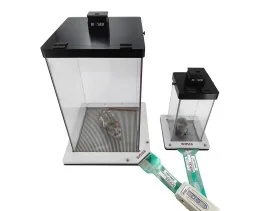

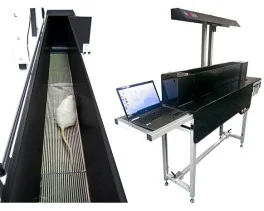
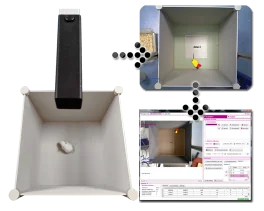
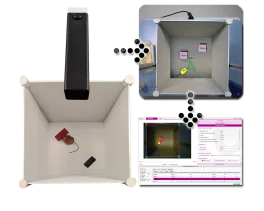
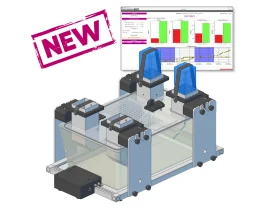
![Dynamic Weight Bearing 2.0 – Postural Module [Add-on]](https://bioseb.com/733-home_default/dynamic-weight-bearing-20-add-on-postural-module.jpg)


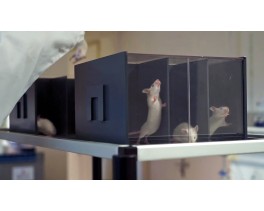



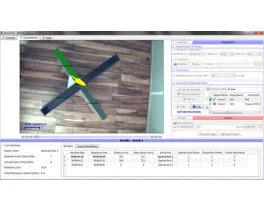





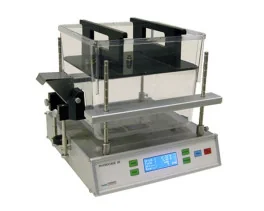


 Pain
Pain Central Nervous System (CNS)
 Neurodegeneration
 Sensory system
 Motor control
 Mood Disorders
 Other disorders
 Muscular system
 Joints
 Metabolism
 Cross-disciplinary subjects
 CONFERENCES & MEETINGS 2026
 Authors
Emma Frank, Kaspar W. Persson, Zakarias Kefil Jensen Ogueboule, Tang Cam Phung Pham, Jonas R. Knudsen, Lykke Sylow, Steffen H. Raun
Lab
San Diego
Journal
bioRxiv
Abstract
Abstract
Purpose
Cancer cachexia is a life-threatening complication of advanced malignancies, driven by anorexia and profound systemic metabolic reprogramming. Insulin action in skeletal muscle is markedly impaired in patients with cancer and may contribute directly to cachexia pathogenesis. However, the interplay between reduced nutrient intake and cancer-associated metabolic rewiring in cachexia remains poorly defined. Clarifying this relationship is essential for identifying the fundamental drivers of cachexia and for developing effective therapeutic strategies.
Methods
We assessed metabolic rewiring by glucose tolerance test and isotopic tracers to determine muscle insulin-stimulated glucose uptake in male cachectic and non-cachectic C26- and KPC-tumor-bearing, as well as mice towards C26 cachectic mice.
Results
Cachectic C26-tumor-bearing mice displayed reduced body weight, lean, and fat mass, and food intake (-20%, -15%, -75%, -40%, respectively). Cachectic C26- and KPC-tumor mice showed improved glucose tolerance compared to non-cachectic mice, correlating inversely with tumor size. Ex vivo insulin-stimulated glucose uptake was elevated in soleus (+78%) and extensor digitorum longus (+35%) muscle from cachectic C26-cancer mice compared to non-cachectic and control mice. This increase was associated with enhanced AKT signaling. This was phenocopied in pair-fed non-tumor-bearing mice to match the food intake of cachectic mice, where glucose tolerance, insulin-stimulated glucose uptake ex vivo, and AKT signaling were all enhanced by food restriction.
Conclusions
Our findings suggest that enhanced skeletal muscle insulin responsiveness in cachectic tumor-bearing mice is due to anorexia-induced adaptations, highlighting AKT signaling as a key node connecting nutrient status to muscle glucose metabolism in cancer cachexia.
Highlights
C26 and KPC cancer-induced weight loss (cachexia) increases glucose tolerance in mice
Insulin responsiveness is increased in cachectic, but not in non-cachectic, tumor–bearing mice.
Lowered food intake drives elevated muscle insulin responsiveness in cachectic mice
Keywords/Topics
effective therapeutic strategies; glucose tolerance test; mice; c26 cachectic mice; kpc-tumor mice; non-cachectic mice; non-cachectic and control mice; pair-fed non-tumor-bearing mice; mice insulin responsiveness; -cachectic tumor bearing mice
Source :
https://www.biorxiv.org/content/10.64898/2026.03.12.711318.abstract