
 Activity, Motor Control & Coordination
 Pain - Thermal Allodynia / Hyperalgesia
 Pain - Spontaneous Pain - Postural Deficit
 Pain - Mechanical Allodynia / Hyperalgesia
 Anxiety & Depression Disorder
 Learning/Memory - Attention - Addiction
 Physiology & Respiratory Research
 Metabolism & Nutrition


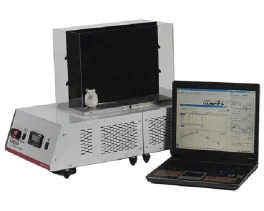

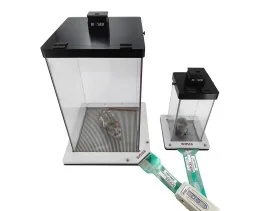

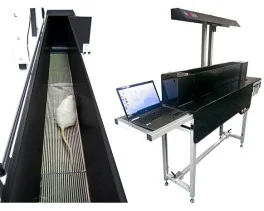
![Dynamic Weight Bearing 2.0 – Postural Module [Add-on]](https://bioseb.com/733-home_default/dynamic-weight-bearing-20-add-on-postural-module.jpg)













 Pain
Pain Central Nervous System (CNS)
 Neurodegeneration
 Sensory system
 Motor control
 Mood Disorders
 Other disorders
 Muscular system
 Joints
 Metabolism
 Cross-disciplinary subjects
 CONFERENCES & MEETINGS 2026
 Authors
Choi, Sungwoo, Yang, Heewon, Kang, Yuri, Lee, Minji, Lee, Doo Hwan, Choi, Sangchun
Lab
* Author to whom correspondence should be addressed.; † These authors contributed equally to this work.; Author to whom correspondence should be addressed.; These authors contributed equally to this work.; Primary and Hospital Care; Tourism and Hospitality
Journal
Brain Sciences
Abstract
Background: Acute carbon monoxide (CO) poisoning can cause delayed neuropsychiatric sequelae (DNS) after a latent period, yet its pathophysiology remains poorly understood because of the lack of reproducible experimental models. Methods: We established a rat model of DNS using acute CO poisoning (6500 ppm for 25 min). Behavioral assessments evaluated cognition, locomotion, sensorimotor function, exploratory behavior, and reward responsiveness. Histopathological analyses assessed brain injury, and regional monoamine concentrations were quantified using high-performance liquid chromatography. Results: CO-exposed rats developed delayed and progressive behavioral abnormalities, including impaired spatial working memory, reduced locomotor activity, sensorimotor dysfunction, and diminished exploratory behavior. At 4 weeks, CO-exposed rats showed reduced Y-maze alternation (49.3% vs. 72.2%, p < 0.0001), complete loss of tape-removal success (0% vs. 100%, p < 0.001), reduced digging behavior (10.1 ± 6.9 vs. 27.4 ± 3.9, p < 0.01), and decreased locomotor activity (330.5 ± 172.1 vs. 730.5 ± 139.5 cm, p < 0.01). In contrast, olfactory discrimination, sucrose preference, and grip strength were preserved. Histopathology demonstrated persistent neuronal and inflammatory alterations. Dopamine concentrations were significantly reduced in the cortex and basal ganglia, whereas thalamic serotonin levels were increased following CO poisoning. Conclusion: Acute CO poisoning induces a reproducible DNS characterized by progressive behavioral impairment, persistent histopathological abnormalities, and regional monoaminergic dysregulation. These findings support the concept that DNS is an evolving neuropathological process and identify dopaminergic pathways as potential therapeutic targets.
Keywords/Topics
reproducible experimental models; behavioral assessments; exploratory behavior; regional monoamine concentrations; co-exposed rats; reduced locomotor activity; reduced digging behavior; grip strength; dopamine concentrations; progressive behavioral impairment
Source :