 Activity, Motor Control & Coordination
 Pain - Thermal Allodynia / Hyperalgesia
 Pain - Spontaneous Pain - Postural Deficit
 Pain - Mechanical Allodynia / Hyperalgesia
 Anxiety & Depression Disorder
 Learning/Memory - Attention - Addiction
 Physiology & Respiratory Research
 Metabolism & Nutrition
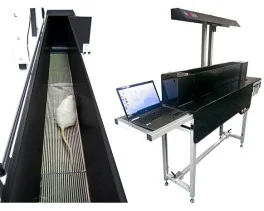
![Dynamic Weight Bearing 2.0 – Postural Module [Add-on]](https://bioseb.com/733-home_default/dynamic-weight-bearing-20-add-on-postural-module.jpg)


 Pain
Pain Central Nervous System (CNS)
 Neurodegeneration
 Sensory system
 Motor control
 Mood Disorders
 Other disorders
 Muscular system
 Joints
 Metabolism
 Cross-disciplinary subjects
 CONFERENCES & MEETINGS 2026
 Authors
Hanna Kalenta, Erik D Marchant, Sean P Kilroe, Rosario Maroto, Jacquelyn T May, Vladislav Bugay, Trevor B Romsdahl, Jennifer J Linares, Mandy R Hinojosa, Zhao Lai, William K Russell, Blake B Rasmussen
Lab
Journal
Journal of applied physiology (Bethesda, Md. : 1985)
Abstract
LC-MS/MS analysis for polar metabolites was performed using a 1260 Infinity UHPLC System (Agilent) coupled to a Turbo V electrospray ionization (ESI) source and a Qtrap 6500 mass spectrometer (SCIEX). In brief, the samples were separated in HILIC mode using an Atlantis Premier BEH Z-Hilic column (2.5 μm, 2.1 × 150 mm, Waters). Mobile phase A consisted of acetonitrile/water (10:90, v/v) + 10 mM ammonium acetate + 2.5 μM InfinityLab deactivator agent (Agilent), pH 9.0; and mobile phase B consisted of acetonitrile/water (90:10, v/v) + 10 mM ammonium acetate + 2.5 μM InfinityLab deactivator agent (Agilent), pH 9.0. All solvents were LCMS grade. The LC gradient was as follows: 0–2 min, 15% A; 2–6 min, 15% to 70% A; 6–15 min, 70% to 85% A; 15–16 min 85% to 95% A; 16–20 min, 95% A; 20–22 min, 95 to 15% A; 22–32 min, 15% A. The flow rate was 200 μL/min, and the column temperature was 35°C. Ten microliters of samples were injected. Polar metabolites were analyzed using scheduled multiple reaction monitoring (sMRM) for a total of 274 metabolites. The ESI source parameters were set as follows: curtain gas (CUR) at 25 psi, collision activated dissociation (CAD) set to high temperature of 475°C, nebulizing gas (GS1) and heating gas (GS2) at 35 psi, and ionspray voltage at 4,500 V in positive ionization mode and −4,500 V in negative ionization mode. Lipids were analyzed using the same LC and mass spectrometer described earlier, using a method previously described (23). Samples were separated in HILIC mode using a Luna NH2 column (3 μm, 150 × 4.6 mm, Phenomenex). Mobile phase A consisted of acetonitrile/water/hexane (92:6:2, vol/vol/vol) + 2 mM ammonium acetate, pH 9.3, and mobile phase B consisted of acetonitrile/water (50:50, vol/vol) + 2 mM ammonium acetate, pH 9.3. The gradient was as follows: 0–2 min, 100% A; 2–6.5 min, 100% to 60% A; 6.5–7 min, 60% to 55% A; 7–9 min, 55% A; 9–9.5 min, 55% to 30% A; 9.5–12 min, 30% A; 12–12.1 min, 30% to 15% A; 12.1–14.5 min, 15% A; 14.5–14.6 min, 15% to 0% A; 14.6–17 min, 0% A; 17–18.1 min, 0% to 100% A; 18.1–22 min, 100% A. The flow rate was 1 mL/min, column temperature was 35°C, and the injection volume was 5 μL. Lipids were also analyzed using sMRM for a total of 1,870 lipid species across 18 lipid classes. The ESI source parameters were set as follows: CUR set to 30 psi, CAD set to medium, temperature set to 450°C, GS1 set to 50 psi, GS2 set to 55 psi, and ionspray voltage set to 5,500 V in positive ionization mode and −4,500 V in negative ionization mode.10 samples per group were processed and analyzed.
Keywords/Topics
alterations; high temperature; endurance training; mitochondrial; lipid profiles lc-ms ms; polar metabolites; agilent; ionization; esi source; sciex
Source :