
 Activity, Motor Control & Coordination
 Pain - Thermal Allodynia / Hyperalgesia
 Pain - Spontaneous Pain - Postural Deficit
 Pain - Mechanical Allodynia / Hyperalgesia
 Anxiety & Depression Disorder
 Learning/Memory - Attention - Addiction
 Physiology & Respiratory Research
 Metabolism & Nutrition



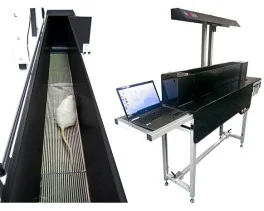
![Dynamic Weight Bearing 2.0 – Postural Module [Add-on]](https://bioseb.com/733-home_default/dynamic-weight-bearing-20-add-on-postural-module.jpg)





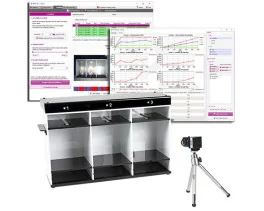

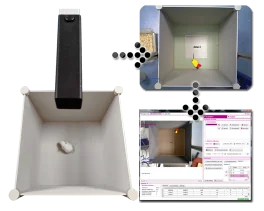


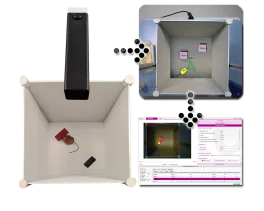

 Pain
Pain Central Nervous System (CNS)
 Neurodegeneration
 Sensory system
 Motor control
 Mood Disorders
 Other disorders
 Muscular system
 Joints
 Metabolism
 Cross-disciplinary subjects
 CONFERENCES & MEETINGS 2026
 Authors
Tonghan Li, Xuan Zhao, Zhikai Xu, Fan Yang, Zhanfei Li, Xiangjun Bai, Hao Zhu, Hong Zhao, Yukun Liu, Yuchang Wang
Lab
Browse the help center
Journal
Shock
Abstract
Plain Language SummaryThis study tested whether selenomethionine (Se-Met) can protect against sepsis-induced skeletal muscle atrophy and explored how it works. In a mouse cecal ligation and puncture model, Se-Met improved survival, body weight, muscle strength, and muscle fiber size. Se-Met reduced expression of Atrogin-1 and MuRF1, key proteins driving muscle protein degradation. In septic mice, Se-Met inhibited the NLRP3/Caspase-1/GSDMD pyroptosis pathway and reduced inflammatory cytokines such as IL-18 and IL-1β in skeletal muscle. In lipopolysaccharide-stimulated C2C12 myoblasts, Se-Met lowered reactive oxygen species and malondialdehyde, increased antioxidant enzymes (superoxide dismutase and glutathione peroxidase), and suppressed pyroptosis by inhibiting the ROS/NLRP3/Caspase-1/GSDMD pathway and inflammatory cytokines including IL-6 and IL-18. These findings support Se-Met as a potential therapy for sepsis-related and other oxidative stress-related muscle injury.
Keywords/Topics
septic mice; effective therapeutic strategies; selenomethionine; se-met; sepsis-induced skeletal muscle atrophy; improved survival; body weight; muscle strength; muscle fiber size; se-met reduced expression
Source :
