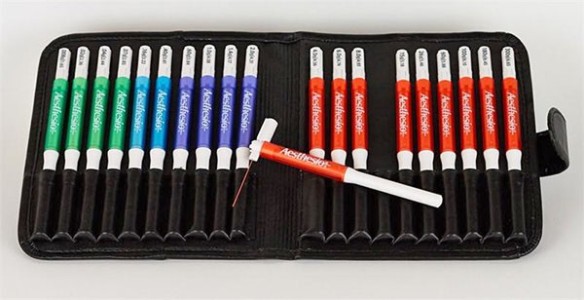
 Activity, Motor Control & Coordination
 Pain - Thermal Allodynia / Hyperalgesia
 Pain - Spontaneous Pain - Postural Deficit
 Pain - Mechanical Allodynia / Hyperalgesia
 Anxiety & Depression Disorder
 Learning/Memory - Attention - Addiction
 Physiology & Respiratory Research
 Metabolism & Nutrition
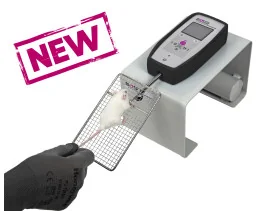
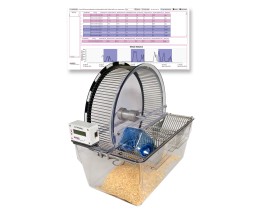
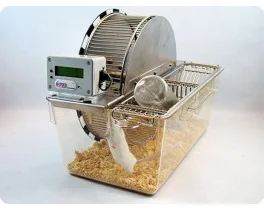
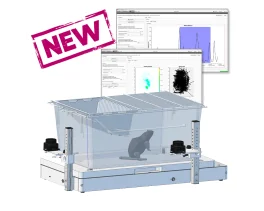
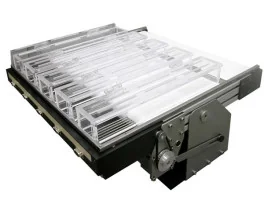
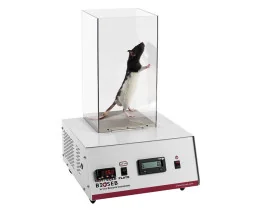
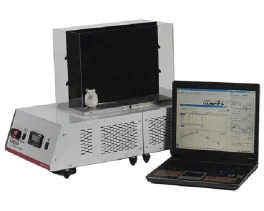
![Dynamic Weight Bearing 2.0 – Postural Module [Add-on]](https://bioseb.com/733-home_default/dynamic-weight-bearing-20-add-on-postural-module.jpg)




 Pain
Pain Central Nervous System (CNS)
 Neurodegeneration
 Sensory system
 Motor control
 Mood Disorders
 Other disorders
 Muscular system
 Joints
 Metabolism
 Cross-disciplinary subjects
 CONFERENCES & MEETINGS 2026
 Authors
Warren Moore, Johan Nikesjö, Otmane Bouchatta, Adarsh D. Makdani, Pierre Hakizimana, Mikael Rousson, Basil Duvernoy, Sarah McIntyre, Laura J. Pehkonen, Anders Fridberger, Francis McGlone, Hakan Olausson, Saad S. Nagi, Andrew Marshall
Lab
Journal
The Journal of Physiology
Abstract
The proposed close anatomical relationship between CTs and hair movements can adequately explain their exquisite sensitivity to mechanical stimuli. Indeed, force activation thresholds of CTs using monofilaments should be interpreted with caution given that hairs may be inadvertently moved during skin stimulation. Data on the responsiveness of CTs to hair movement in humans are sparse, and we can only speculate on why our results indicate a greater CT sensitivity to hair deflection compared to previous literature. We undertook a rigorous systematic exploration of 15 consecutively recorded CTs where a single hair was carefully deflected under magnification, and perhaps previous studies have not focused on hair deflection responses in detail. Nordin (1990) described a single CT unit innervating human scalp hair that responds vigorously to displacement and replacement of a single hair, but not to sustained displacement. Ackerley et al. (2014) stated that CTs do not respond to air puffs, which activated Aβ hair follicle afferents. Given that CTs can innervate more than one follicle within a receptive field, it could also explain the receptive field properties of CTs which typically exhibit several hotspots of mechanical sensitivity, which could potentially reflect the location of hair follicles (Wessberg et al.,2003). CTs remained sensitive to soft brushing and/or vonFrey monofilament indentation following the removal of individual hairs. However, it is not possible to know whether these were responses to direct skin stimulation or the result of the movement of other hairs within the receptive field. We did not assess whether removal of hairs changed the receptive field properties (e.g. altered the number or sensitivity of the hotspots after shaving of the hair as described by Wessberg et al. (2003). To what extent CTs/C-LTMRs have a role in the perception of individual hair deflections is unknown. Hair follicles in humans are also co-innervated by Aβ LTMR afferents. Unlike CTs/C-LTMRs, which have slow velocities and elicit poorly localized perceptions (Olausson et al.,2008), Aβ hair follicle and Aδ (D-hair) LTMR afferents have fast conduction velocities and other properties in keeping with a discriminative role. In rodents, D-hair afferents show a robust response to vibration (Furukawa et al.,2009; Lechner & Lewin,2013) and, in both humans (Aβ hair follicle afferent LTMRs) and rodents (Aβ hair follicle afferent LTMRs and D-hair afferents), have firing frequencies that show a linear relationship to brushing velocity (Bai et al.,2015; Greenspan et al.,1992; Löken et al.,2009). A role for CTs in mechanically evoked itch delivered using vibratory stimulation of vellus hairs has been postulated in humans (Fukuoka et al.,2013) for which a prerequisite would be a close anatomical relationship between CTs and hair follicles. However, mechanically evoked itch on hair vibration is only reliably evoked in trigeminal innervated skin. In support of an anatomical association, a weak positive relationship between hair follicle density and affective touch pleasantness has been described (Jönsson et al.,2017). Synchronous body-wide activation of CT afferents during an episode of generalized piloerection (Fig.6) is probably relevant to the tingling sensation that accompanies goosebumps (Harrison & Loui,2014). Piloerection can occur under a variety of circumstances including as a response to emotional stimuli of positive or negative valence (Harrison & Loui,2014; McPhetres & Zickfield,2022; Tihanyi et al.,2018). Occurring as a psychophysiological response to a rewarding stimulus, goosebump-induced mass CT afferent activation may contribute to the positively-valanced affective state variously termed a frisson, aesthetic chills, psychogenic chills, or, given the pleasurable nature of the skin tingling, a skin orgasm.
Keywords/Topics
C-tactile afferent; hair movement; hair follicle; microneurography
BIOSEB Instruments Used:
Von Frey Filaments (BIO-VF-M)
Source :
https://physoc.onlinelibrary.wiley.com/doi/abs/10.1113/JP287706