
 Activity, Motor Control & Coordination
 Pain - Thermal Allodynia / Hyperalgesia
 Pain - Spontaneous Pain - Postural Deficit
 Pain - Mechanical Allodynia / Hyperalgesia
 Anxiety & Depression Disorder
 Learning/Memory - Attention - Addiction
 Physiology & Respiratory Research
 Metabolism & Nutrition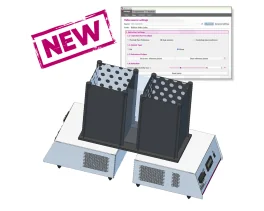
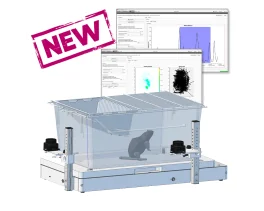
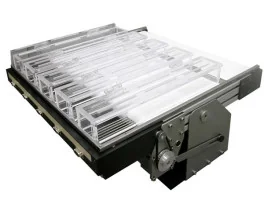
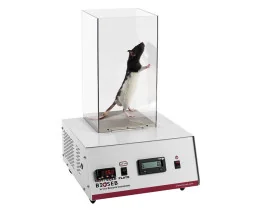
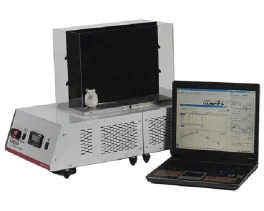
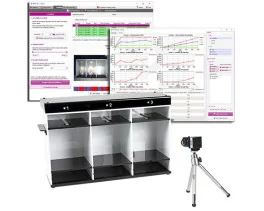
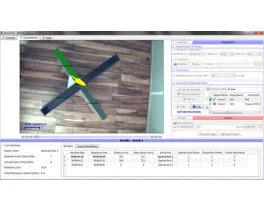
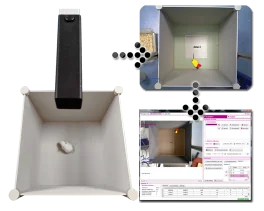
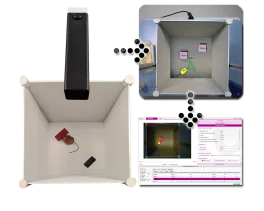
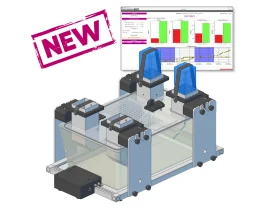
![Dynamic Weight Bearing 2.0 – Postural Module [Add-on]](https://bioseb.com/733-home_default/dynamic-weight-bearing-20-add-on-postural-module.jpg)





 Pain
Pain Central Nervous System (CNS)
 Neurodegeneration
 Sensory system
 Motor control
 Mood Disorders
 Other disorders
 Muscular system
 Joints
 Metabolism
 Cross-disciplinary subjects
 CONFERENCES & MEETINGS 2026
 Authors
Sachula, Zhenjie Yang, Tianyuan Yu, Jinping Chen, Runlong Zhang, Yingqi Zhang, Jiayue Liu, Hanyu Zhang, Jiawei Sun
Lab
Journal
Journal of Pain Research
Abstract
Neuropathic pain (NP), as a chronic pain caused by disease or neurological damage,Citation1such as acute posterior ganglionitis, epileptiform neuralgia, neuropathy, apoplexia, diabetic neuropathy, Inflammatory mediated, trauma.Citation2,Citation3The pain is divided into three categories: nociceptive pain, inflammatory pain and neuropathic pain,Citation4and the neuropathic pain divided into central and peripheral two types. Peripherally-induced neuropathic pain is one of the most common types, which symptoms include spontaneous pain, for example burning, needling, tenderness, abnormal temporal summation, abnormal sensation, numbness, spontaneous pain hypersensitivity, hyperalgesia, allodynia, etc.Citation5-7Epidemiological investigation and study finding that prevalence in the population is as high as 7-10%.Citation8-10It brings serious damage to patients' physical and mental health. The first-line agents recommended for treatment are the calcium-channel-acting anticonvulsants pregabalin and gabapentin, tricyclic antidepressants, serotonin-norepinephrine reuptake inhibitors (duloxetine, venlafaxine), opioids and cannabinoids and non-drug therapy, such as interventional therapy, psychotherapy, surgery. Which are the effect is slow, so that patients have tolerance, dependent side effects and Non-drug therapy is expensive.Citation11-14Tuina, as a complement and alternative therapy,Citation15is one of the external treatment of traditional Chinese medicine, the unique advantages of the treatment of traditional Chinese medicine arthralgia gradually highlighted, with the general rule is not painful as the treatment principle, the manipulation of the meridians and acupoints, through dredging the meridians, Qi and blood circulation, to achieve the effect of pain relief.Citation16,Citation17A number of studies have shown that tuina treatment of peripheral nerve injury has better efficacy and has fewer side effects. A great number of clinical studies have found that the tuina can relieve pain effectively. Such as Yan H, etcCitation18by meta-analysis finding that the safety and efficacy of tuina therapy were determined by the efficacy of tuina therapy in patients with sciatic nerve injury. Xiao B, etcCitation19Visual analog scale score, upper limb index, electromyography and other indicators were used to evaluate the therapeutic effect of tuina on patients with brachial plexus injury, so as to provide therapeutic basis for tuina on peripheral nerve injury. Miao Z, etcCitation20through meta analysis to determined that tuina is safety and effectivity for peripheral nerve injury caused by a lumbar disc herniation(LDH). A large number of basic experimental research findings the paining effect of tuina. For example, Xiao B, etcCitation21findings that tuina can achieve analgesic effect by down-regulating Beta-endorphin and GABA of Brachial plexus injury in rats. Yao C, etcCitation22research chronic compression of dorsal root ganglia (CCD) rats finding thatthe abirritation of tuina is mediated by regulation microRNA-547-3p through the Map4k4/NF-kB pahyway, to regulate inflammatory cytokines. Our team's preliminary experimental study using Three-Manipulation and Three-Acupoint to treat peripheral nerve injury has made good progress. The three manipulations are pointing manipulation, pulling manipulation and kneading manipulation. Pointing manipulation has the effect of warming the meridian and activating collaterals; Pulling manipulation can relieve paralysis and pain of limbs; The kneading manipulation can relieve muscle spasms, eliminate fatigue and reduce pain in the injured area. Use three can effectively relieve pain. The three Acupoints refers to Yinmen, Chengshan and Yanglingquan three points, the three Acupoints belong to the foot sun bladder meridian and foot Shaoyang gallbladder meridian, according to the sciatic nerve anatomy, Yinmen point in sciatic nerve trunk, Chengshan point in the tibial nerve and Yanglingquan point in the biceps femoris, gastrocnemius, tibial anterior muscle around. The preliminary study simulated NP in sciatic nerve injury (SNI), chronic constriction injury (CCI), chronic compression of the dorsal root ganglion (CCD) rats to detect the mechanism of NP in tuina repair.Citation23-25But these researches mainly focused on the long-term analgesic effect of tuina. In clinical studies, tuina immediately can achieve analgesic effect.Citation26However, tuina's immediate analgesic mechanism is not clear.
Keywords/Topics
neuropathic pain;tuina ;neuro transmitters;thalamus ;spinal ;dorsal hornLC -;Neuropathic pain ( NP )
BIOSEB Instruments Used:
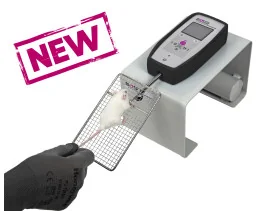
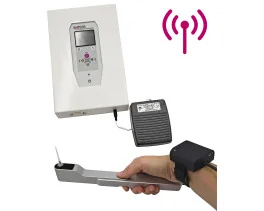
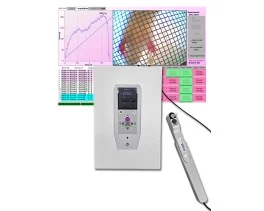
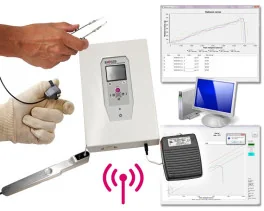
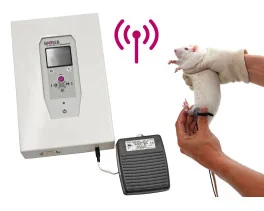
Rodent pincher - Analgesia meter - Wireless (BIO-RP-WRS)
Source :
