 Activity, Motor Control & Coordination
 Pain - Thermal Allodynia / Hyperalgesia
 Pain - Spontaneous Pain - Postural Deficit
 Pain - Mechanical Allodynia / Hyperalgesia
 Anxiety & Depression Disorder
 Learning/Memory - Attention - Addiction
 Physiology & Respiratory Research
 Metabolism & Nutrition



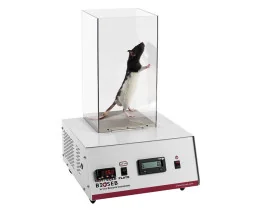
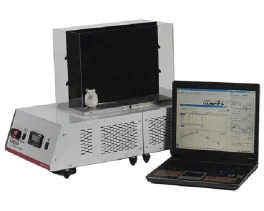

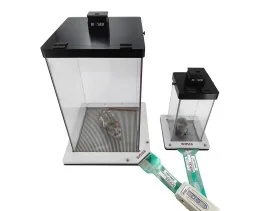

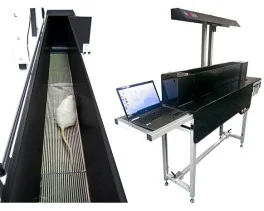
![Dynamic Weight Bearing 2.0 – Postural Module [Add-on]](https://bioseb.com/733-home_default/dynamic-weight-bearing-20-add-on-postural-module.jpg)





 Pain
Pain Central Nervous System (CNS)
 Neurodegeneration
 Sensory system
 Motor control
 Mood Disorders
 Other disorders
 Muscular system
 Joints
 Metabolism
 Cross-disciplinary subjects
 CONFERENCES & MEETINGS 2026
 Authors
Henning Tim Langer, Natalie K. Gilmore, Christopher M.T. Hayden, Julien Roux, Bruno Bariohay, Thaïs Rouquet, Manar Awada, Julie Marcotorchino, Lorrine Bournot, Elizabeth Nunn, Paul M. Titchenell, Daniela Liskiewicz, Timo D. Müller, Oluwaseun Anyiam, Philip J. Atherton, Iskandar Idris, Andreas Hentschel, Andreas Roos, Natalie Haritonow, Kristina Norman, Ursula Müller-Werdan, Keith Baar
Lab
France; France; 1950
Journal
Cell Reports Medicine
Abstract
Summary
The large decrease in body weight with glucagon-like peptide-1 (GLP-1) medicines raises concern about a loss of lean body mass (LBM) and skeletal muscle. In this work, we present four pre-clinical studies and a proof-of-concept clinical trial that address this issue. We report that in obese mice, GLP-1 medicines predominantly reduce body fat alongside a small but significant decrease in LBM. Among lean tissues, loss of liver mass exceeds change in muscle mass. While absolute muscle mass and strength decrease, relative muscle mass and strength improve, resulting in better running performance. Interestingly, while atrophy is similar during immobilization, GLP-1 medicines have a distinct effect on the muscle proteome compared to calorie restriction. Patients with obesity on GLP-1 medicines improve their body composition without negatively affecting strength. Overall, in middle-aged mice and men, GLP-1 medicines slightly decrease absolute muscle values but positively impact body composition and mobility.
The clinical trial is registered on clinicaltrials.gov (NCT05606471).
Keywords/Topics
GLP-1; muscle loss; obesity; incretins; wasting; weight loss; atrophy; function; muscle mass
BIOSEB Instruments Used:
Bioseb CIS Software (BIO-CIS2),Grip strength test (BIO-GS4)
Source :
https://www.cell.com/cell-reports-medicine/fulltext/S2666-3791(26)00082-0