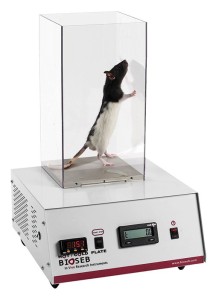
 Activity, Motor Control & Coordination
 Pain - Thermal Allodynia / Hyperalgesia
 Pain - Spontaneous Pain - Postural Deficit
 Pain - Mechanical Allodynia / Hyperalgesia
 Anxiety & Depression Disorder
 Learning/Memory - Attention - Addiction
 Physiology & Respiratory Research
 Metabolism & Nutrition

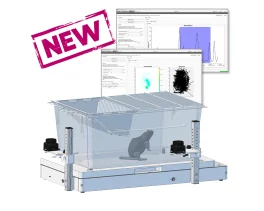

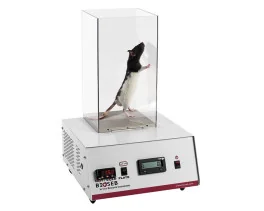
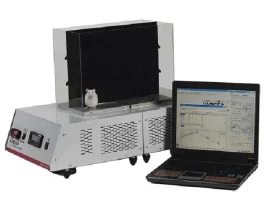

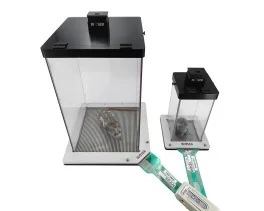






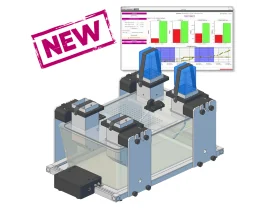
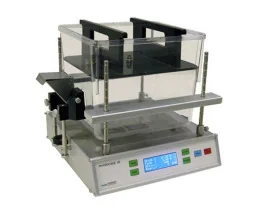
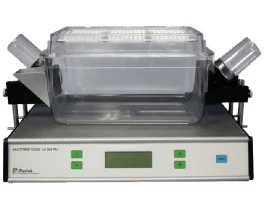


 Pain
 Central Nervous System (CNS)
 Neurodegeneration
 Sensory system
 Motor control
 Mood Disorders
 Other disorders
 Muscular system
 Joints
 Metabolism
 Cross-disciplinary subjects
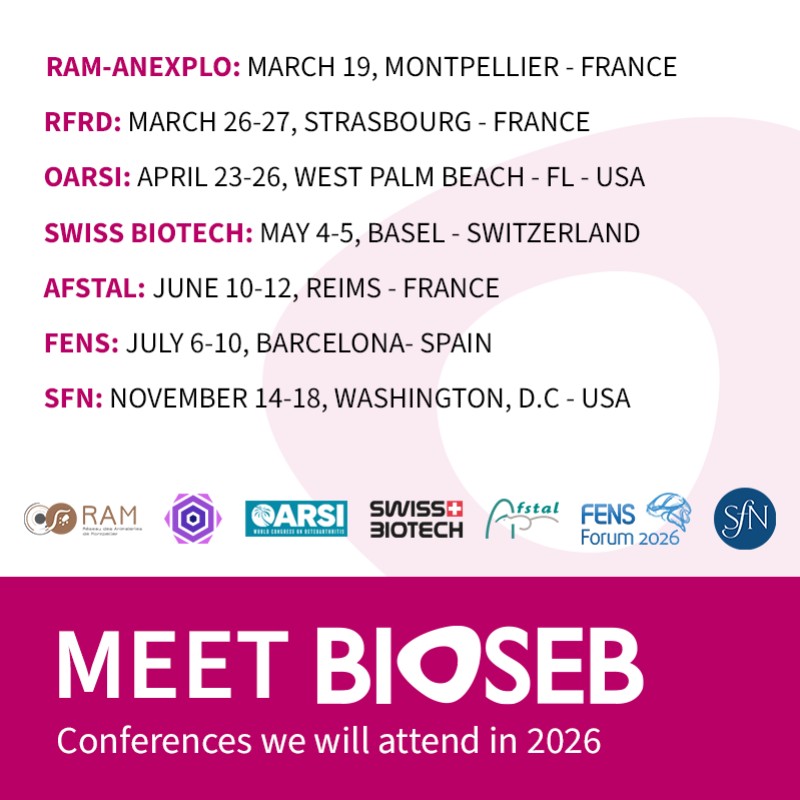 CONFERENCES & MEETINGS 2026
Authors
Hannah Illouz, Edith Tanche, Ophélie Schaack, Vincent Lelievre, Pierrick Poisbeau
Lab
University of Strasbourg; EURIDOL Graduate school of pain; Allen Institute for Cell Science; Arc Institute; Babraham Institute; Brown University; California Institute of Technology; Carnegie Mellon University; Case Western Reserve University; Centre for Microbiology and Environmental Systems Science; Columbia University; Donders Institute for Brain; Cognition and Behaviour; Ernst Strüngmann Institute (ESI) for Neuroscience; European Molecular Biology Laboratory (EMBL); Francis Crick Institute; Fred Hutchinson Cancer Center; Georgia Institute of Technology; The Howard Hughes Medical Institute (HHMI); Institute of Science and Technology Austria; Iowa State University; Johns Hopkins University; Michigan State University; Morgridge Institute; National Taiwan University; North Carolina State University; Northeastern University; Oregon Health & Sciences University; RNA Therapeutics Institute at UMass Chan Med School; Rutgers University; Stowers Institute for Medical Research; Stockholm University; Tel Aviv University; The Rockefeller University; The Sainsbury Laboratory; The Whitehead Institute; University of Connecticut Health Center; University of California; Berkeley; University of California; San Diego; University of California; San Francisco; University of Chicago; University of Geneva; University of Guelph; University of Hong Kong; University of Illinois Chicago; University of Iowa; University of Kansas; University of Massachusetts Chan Medical School; University of New South Wales; University of Ottawa; University of Sydney; Vanderbilt University; Vienna BioCenter; Washington University in St. Louis; Weizmann Institute of Science; Yale University
Journal
bioRxiv
Abstract
Abstract
Early life stress (ELS), modeled in rodents through neonatal maternal separation (NMS), induces lasting behavioral and molecular alterations including pain hypersensitivity, anxiety-like behaviors, and cognitive deficits. While NMS disrupts the oxytocinergic system, the specific contribution of oxytocin receptor (OTR) dysfunction during critical neurodevelopmental periods remains unclear. Here, we investigated whether neonatal OTR blockade alone could recapitulate key features of the NMS phenotype. Control rats received daily injections of the selective OTR antagonist d(CH2)5-Tyr(Me)-[Orn8]-vasotocin (dOVT) during postnatal days 2-12, matching the NMS period. At adulthood, behavioral assessments revealed that control+dOVT animals exhibited mechanical and cold thermal hypersensitivity similar to NMS rats, though hot thermal sensitivity was unaffected. Anxiety-like behaviors observed in NMS animals were not reproduced by dOVT treatment. Notably, sex-specific spatial memory deficits emerged: male NMS and female control+dOVT rats showed impaired object location recognition, while females and males in their respective opposite groups remained unaffected. Molecular analyses of spinal cord tissue revealed significant downregulation of GAD65, BDNF, and CD11b in control+dOVT animals. Chloride cotransporters NKCC1 and KCC2 exhibited sexual dimorphism with opposite changes in NMS males versus females and different responses to dOVT. These expressions yet converged on an elevated NKCC1/KCC2 ratio in both sexes, indicating compromised chloride homeostasis despite sex-divergent molecular pathways. These findings demonstrate that developmental OTR dysfunction likely contributes to nociceptive and cognitive consequences of ELS, while anxiety-like phenotypes probably involve additional mechanisms. This work highlights OTR as a critical mediator of neurodevelopmental programming and a potential therapeutic target for mitigating ELS-related disorders.
Keywords/Topics
pain hypersensitivity; rodents; neonatal maternal separation; anxiety-like behaviors; control rats; behavioral assessments; nms rats; hot thermal sensitivity; female control dovt rats; mechanical nociception
Source :
https://www.biorxiv.org/content/10.64898/2026.07.04.736474.abstract